









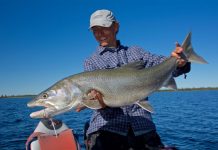
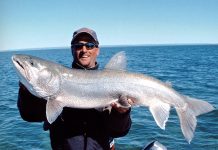

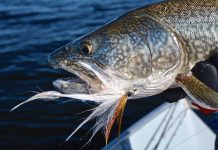


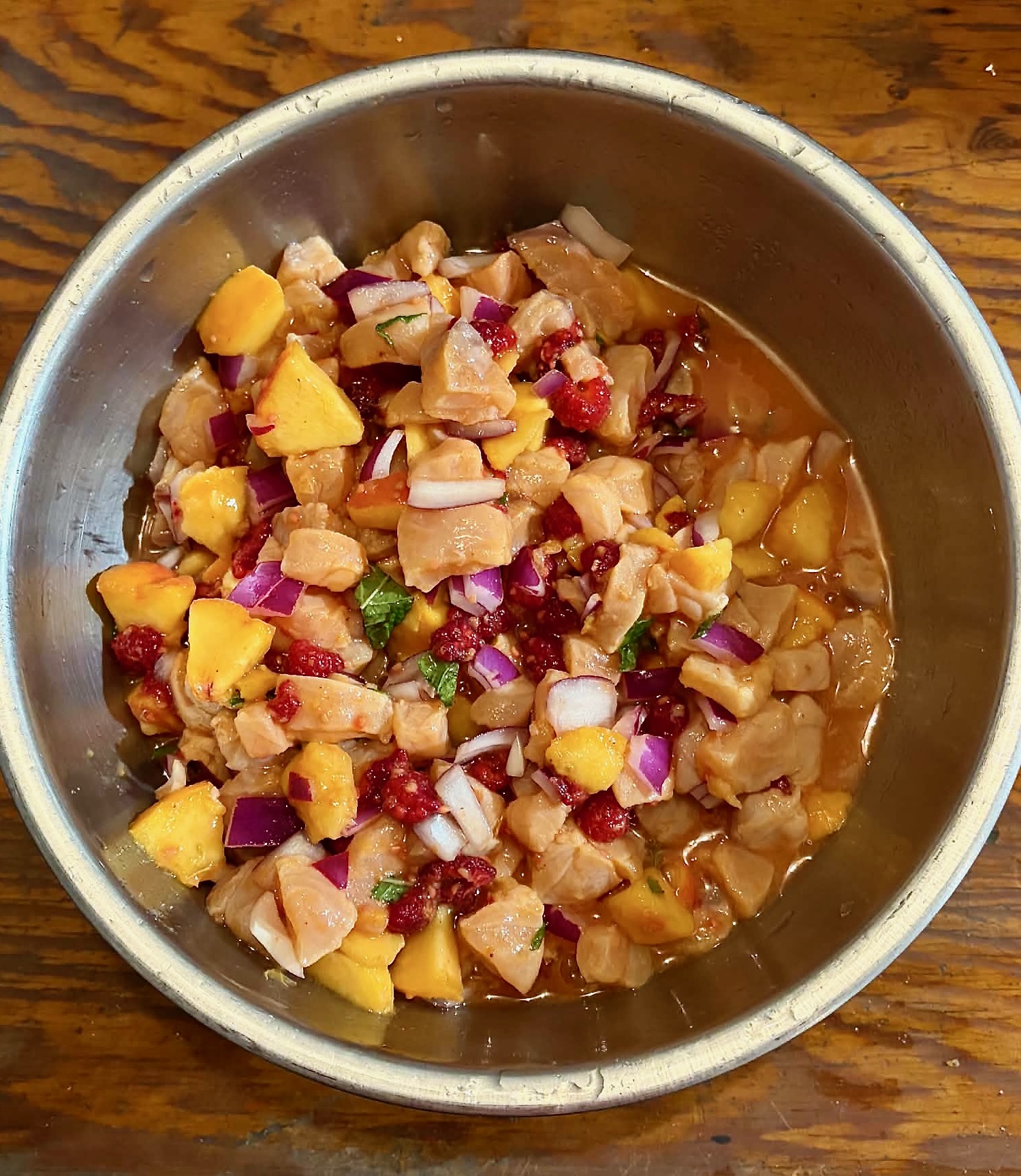
Ceviche is a process whereby fish or seafood is “cooked” without heat through a chemical process called protein denaturation, which given the purity of the water and the exceptional quality of the Lake Trout that Great Bear Lake therefore produces, you may want to seriously consider using this method to prepare your fish rather than one of the more traditional ones such as frying or baking.
And trust me when I say that if you decide to go this route, you will not be disappointed.
Ingredients
• 2 fillets from a 5/6-pound Lake Trout
• 1 large red, yellow and orange pepper
• 1 medium sweet onion
• 1 hot pepper, such as a Jalapeno, Serrano or Habanero.
• 1 large tomato
• 1 small cucumber
• Handful of chopped, fresh cilantro – including stems
• Salt
• Honey
• White vinegar
• Fresh lemon juice
• Juice from ½ of a large orange
Cut the fish, peppers, onion, tomato and cucumber into ½ inch chucks and set aside.
Finley chop the hot pepper and set aside in a small bowl.
In a small bowl combine 1 tbs of salt and 1 tbs fresh lemon juice. Taste the mixture as the flavour of your ceviche will reflect the amount of salt/lemon used in this mixture. Adjust the amount of salt/lemon, if need be, to your taste.
Combine the fish and the salt/fresh lemon juice mixture in a large bowl. Mix well and let marinate for 20 to 30 minutes, stirring occasionally.
Drain well, reserving a small amount of the lemon/salt mixture in the bowl.
Add the vegetables and mix well.
Add a splash of vinegar and 1 tbs of honey and mix well. Taste, and adjust the amount of salt, vinegar and honey, if need be.
Add the hot pepper, or if no hot peppers are available, a couple of dashes of hot sauce such as Tabasco or Siracha, then mix in the orange juice.
And finally, gently mix in the cilantro.
Serve with tortilla chips, crackers, or simply dig in with a large spoon!
Chef Steve’s Notes
If using a very hot pepper such as a Habanero, chop it up finely and pulverize with some vinegar or lemon juice in order to cut the heat somewhat before adding it to the ceviche mixture. This also makes it easier to blend into the mixture.
In the event you can’t lay your hands on a sweet onion, a yellow or red onion can be used in the alternative.
Honey may seem to be something of an odd ingredient, but it is used to balance the heat, the tartness of the lemon, and the salt, so don’t hesitate to add a bit more than recommended to balance things up.
If there is no fresh citrus available you will have to skip the orange juice, but you can substitute bottled Real Lemon, which is a Plummer’s staple, for the fresh lemon juice.
Arctic Char is a perfectly acceptable substitute for Lake Trout in this recipe.
Under no circumstances should you substitute a green pepper for either the red, yellow or orange ones.
Other Stuff
If preparing this while up on the Bear, there is a good chance that some of the ingredients such as fresh cilantro and the more exotic hot peppers may not be available, therefore if need be, don’t be afraid to use your imagination and make some substitutions utilizing the ingredients at hand, such as pineapple chunks for example, so long as you don’t let your imagination soar to the point where you think that a green pepper is a perfectly suitable substitute for the sweet peppers itemized above.
Should you decide to give this a try at home and depending on the style of ceviche that you prefer, such as Mexican, Peruvian, Japanese, etc., try it with Sea Bass, Halibut, Red Snapper, Yellowfin Tuna, or any other lean, firm, or semi-firm white saltwater fish.
Freshwater fish, unless coming from a place like Great Bear Lake or Tree River where the water is essentially free from any containments, is best avoided in order to minimize any parasite risks.