
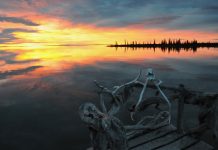

Before we get going with this, I wanted to let you know that what you are about to read is based on my personal opinions and experiences having fished the Bear for over 40 years, and is not intended to be the be all and end all when it comes to the factors you may wish to consider before and after booking a trip.
The foremost full service outfitter on the lake is Plummer’s Arctic Lodges who, when it comes to organizing and outfitting sportfishing trips on the Bear, given their history and experience, which began back in the 1950’s – clearly have no equal. And while I have included information on pricing and such, if you are contemplating booking with Plummers, always contact them directly to ensure that you have the most up to date and accurate information available.
Finally, if you have already made your decision and booked, particularly if it’s your first one, you may want to scroll down directly to Chapter 6.
Chapter 1
Why Go to Great Bear Lake?
In my opinion why is one of few words in the English language that can evoke a remarkable amount of discussion, and lead to endless possibilities simply by putting it in the form of a question.
Think about it, where would we be as a species if we didn’t bother to ask ourselves and others – Why?
Well to start with, folks would probably still think the earth was flat, flight would be the sole purview of birds, and we would likely figure the end was upon us during an eclipse, to name just few.
So why go to Great Bear Lake?
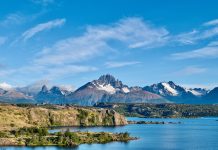
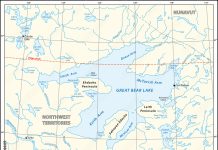
To say that Great Bear Lake and the rugged environs that lie beyond its borders are special, is akin to describing the Titanic as just another boat.
The Bear is hands down, like no other place on earth.
How many places have you visited, or dreamed of visiting that can be described as uncompromising, gentle, harsh, peaceful, unforgiving, serene, spectacular, subtle, unrelenting, magnificent, beautiful and even mysterious?
My guess is not many, if any at all.
For many, a trip to Great Bear Lake is likely to be a “once in a lifetime” experience, and unless you have done your share of travelling to remote locations in the far North – the Arctic in particular – preparing for a trip of this kind, takes a fair amount of thought and planning.
Environmental conditions can run to extremes, and changes in the weather are at times measured in minutes or hours, rather than days. It can get downright hot, and ice and snow are not unheard of throughout the short Arctic summer.
The fish you catch will challenge your skill and equipment in ways you may have never encountered, and if you happen to forget some critical item, like your medication or prescription glasses, it’s one hell of a long walk to the nearest pharmacy or optician.
Over the years I have asked a number of people why they went to all the expense and bother of coming this far north, and while receiving the occasional shrug and/or puzzled look, which probably meant to suggest that this was perhaps a really dumb question, the answers I did get were as varied and unique as the individuals themselves.
They came to:
- Fish the big lake and/or Tree River
- Set world records
- Boldly go where few have gone before
- Hunt (Plummer’s does offer a Muskox hunt)
- See the Northern Lights and/or Midnight Sun
- Drink the purest, best tasting water on the planet
- See unique and spectacular wildlife
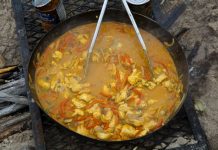
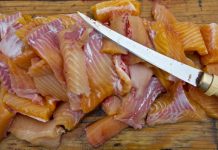
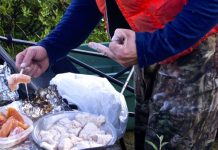
- Have shore lunch
- Walk through history
- Hide
- Test themselves
- Hike
- Connect with old friends
- Canoe/raft the giant lake and/or wild tundra rivers
- Work
- Marvel at the incredible diversity and beauty of the bird and plant life
- Take photographs
- Find themselves
- Travel back in time
- Cross one off the bucket list
- Explore
- Prospect
- Find peace
- Live
- Breath
- Be amazed, and
- To be continued…
As for Me…
Great Bear Lake was, and perhaps still is for many, one of those mysterious, out of reach places, that only oil tycoons and other zillionaires can afford to visit, and while definitely something of an exaggeration, fishing the Bear does perhaps signal to the recreational angling community that you have “arrived.”
I found it very hard to get my head wrapped around the notion that there was this massive lake – bigger than either Lakes Erie or Ontario – located in a very remote, and relatively unknown part of the world, that only a handful of people fished for a very short time each year.
And the fishing – unbelievable didn’t begin to describe it.
During the mid-70’s I recall reading an article about Great Bear Lake in a newsletter published by the Fenwick Rod Company.
The author painted a picture of a truly remarkable place, and when describing Great Bears monster Lake Trout, happened to mention that the NWT Department of Fisheries, during a tagging program they were engaged in at the time, netted 2 trout weighing 101 and 104 pounds respectively.
Well, let’s just say I was hooked – lame pun intended – and one way or another I was going to get up there. So I saved my pennies, ate a lot of Kraft Dinner, and finally managed to pull it off.
Chapter 2
Set Reasonable Goals and Expectations
First and foremost, ask, and honestly answer the following question:
Why do YOU want to go to Great Bear Lake?
Your answer will, to a large degree, help you to set your personal goals and expectations for the trip.
Some of you may think this suggestion boarders on over-kill, because after all, it’s only a fishing trip – right? Perhaps somewhat more extreme in nature, and little further away – but still a fishing trip.
Maybe for some, but if you only get one shot at this, use up a good chunk of your vacation, and spend a boatload of money, it makes sense to have a clear idea of what your expectations are, and what you can reasonably expect to encounter once you get there.
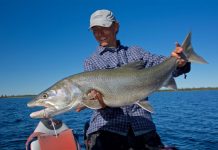
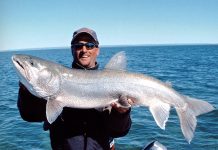
Great Bear Lake has the biggest Lake Trout and Grayling in the world – period. There is world-class Pike fishing available, and if you decide to stay at Plummer’s Great Bear Lake Lodge, you have access to what is perhaps the best – and certainly the most beautiful place to catch Arctic Char anywhere north of the South Pole – the Tree River.
There are countless bays, streams, shoals and inlets across the “Bears” 12,000 square mile expanse that have rarely, if ever seen a line, but the one thing all this incredible water does not come with – is a guarantee.
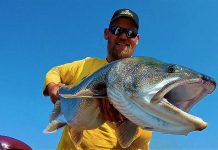
The Arctic can throw all manner of curves at you, and don’t forget they call it fishing, not catching, for a reason. You will certainly catch your share of fish, and are going to be fishing water that holds some real monsters, but 30, 40, 50 -pound Lake Trout are not just going to jump into your boat. The weather can push you off the water, sometimes for days, and even these fish, which are hungry most of the time, can come down with a case of lockjaw on occasion.
Chapter 3
Do Your Research
The very best way to find out what it’s really like, is to talk to people who have actually been there – preferably more than once.
Plummer’s Arctic Lodges, which is the principal lodge operator on the lake, will certainly provide you with references.
Other options are to post questions on this site, Facebook, or you can also Google, Great Bear Lake, and see what comes up.
Check out my Great Bear Lake – Field Journal entries on this site for a blow-by-blow account of what transpired on several of my most recent trips, or for that matter, feel free to drop me a note via the Great Bear Lake Outdoors Facebook page.
The bottom line is this, once you have hopefully figured out the why part and completed your research, if at the end of the day you still have any serious doubts about whether a trip of this kind is for you, my advice is – give it a miss.
Chapter 4
Let the Adventure Begin!
To be honest, you don’t have all that many choices, particularly if you plan on staying at a lodge.
Although there were once as many as five independently owned lodges operating on Great Bear, Plummer’s is now the only game in town.
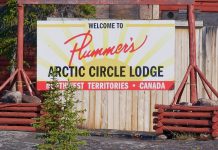
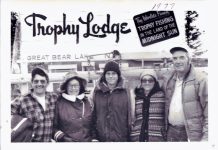
They operate 2 full service lodges – Great Bear Lake Lodge and Trophy Lodge – and the Arctic Circle outpost camp, which is self-guided, with side trips for Arctic Char on the Tree River being available if staying at Great Bear Lake Lodge.
In the alternative, there is a lodge/hotel in Délı̨nę, Great Bear’s only permanent settlement, called Grey Goose Lodge – www.destinationdeline.com – that offer both guided weekend fishing packages and cultural immersion experiences.
While it is theoretically possible to go the “do it yourself” route, unless you have experience traveling solo in the Arctic, the financial resources, and the skills to manage the complex logistics of acquiring and transporting all of the necessary equipment – including boats, motors and fuel – it’s best to go with an experienced outfitter.
I would also suggest, that if thinking about going it alone, before getting too far into the planning process, you should be aware that fishing on Great Bear Lake is likely subject to the Sahtu Dene and Métis Comprehensive Land Claims Agreement.
Therefore, in accordance with this agreement, permission will in all probability be required to access Sahtu Dene and Métis private land, and/or to fish in any designated Special Harvesting Area(s) on Great Bear.
To find out what, if any restrictions apply, contact the applicable Renewable Resources Council or Land Corporation at: Norman Wells (867) 587-2455: receptionist@nwlc.ca, or Délı̨nę (867) 589-8100: receptionist@gov.deline.ca
Chapter 5
When to Head on Up
How does July or August sound?
These are effectively your only two choices if you:
- Book with Plummers,
- Want a reasonable chance of avoiding large quantities of ice that can severely restrict your ability to fish and get around, and
- Would like to increase the odds of getting some relatively stable weather.
When it comes to fishing for Lake Trout, I don’t believe that one particular week is clearly better than any of the others.
Personally, I prefer the second week of July, because the ice has usually just gone out, although there can still be some floating around, and the Trout are likely to be up in the shallows. As an added bonus, the sun never sets early in the season, which means I can fish just about any time the spirit moves me.

As the season progresses, the bigger Trout will drop off onto, and scatter across the main lake shoals, and you’re going to have to fish deeper to find them, particularly during mid-season.
Experience has shown, that while you may have a chance to catch more of the bigger fish just after ice out when they are concentrated in the shallows, there have been many huge fish caught, and in decent numbers both in late July, and throughout the month of August.


If your goal is to catch an Arctic Char at the peak of their spawning colours, mid to late August is your best bet. That’s also a good time to see the Northern Lights.

With respect to smaller trout, Grayling and Pike, they tend to remain relatively shallow throughout the season.
Chapter 6
Getting There
All roads to Great Bear Lake invariably run through Yellowknife, or as the locals call it, YK.
Plummers fly their guests directly to Great Bear from YK, but if doing your own thing, you can either charter an aircraft and fly directly to the lake, or pick up a commercial flight from YK to Norman Wells, then catch one of the regularly scheduled flights operated by North-Wright Air to Deline.
First Air, Air Canada, Westjet, Air North, and Canadian North all offer service to YK. In terms of non-stop flights, they are available out of Edmonton, Calgary, Vancouver, Ottawa and Toronto. Please note that not all of these carriers offer non-stop service to YK from Ottawa, Toronto and Vancouver.
Because airlines do run seat sales from time to time, it’s a good idea to check their websites on a regular basis.
Another other option if you have the time, is to drive to YK. It’s a bit of a hike to say the least, but you will see some interesting country, and maybe even a few Wood Buffalo along the way.
Trips to Great Bear Lake Lodge and Arctic Circle Lodge run Saturday to Saturday, and because the charter flight to Great Bear Lake Lodge and Arctic Circle Lodge leaves early Saturday morning, you have no choice but to get to YK the Friday before, as there are no scheduled flights into YK on Saturday that I am aware of that will arrive before the charter is scheduled to leave.

Please note that trips to Trophy Lodge run Sunday to Sunday, meaning you must be in Yellowknife no later than Saturday in order to catch your Sunday morning charter flight.
On the way out from Great Bear, because anything can, and from time to time does happen to delay your return flight to YK, rather than risk missing your connection, it’s best to stay the night in YK, and fly back the next day.
Chapter 7
While in YK
Yellowknife is the capital city of the Northwest Territories, and has a population of about 20,000.

The city has all of the modern amenities, including a good choice of hotels and restaurants.
Two of the better hotels are the Chateau Nova -http://www.novahotels.ca/chateau-nova-yellowknife/ – and the Explorer – www.explorerhotel.ca. and Plummers will make hotel reservations for you at these establishments at the “lodge” rate. Both also have decent restaurants.
It’s also worth considering heading over to the “Old Town, and grabbing a bite at either the famous Wildcat Cafe, Bullock’s Bistro for fresh fish from Great Slave Lake, or the Woodyard Brewhouse and Eatery, who offer a number of excellent house brewed beers. A relatively new player on the YK dining scene is the Copper House, and having eaten there on several occasions, I can attest to the fact that the food is very good.

For something a bit more casual, stop by the Walrus Fried Fish & Griddle: https://www.facebook.com/profile.php?id=61577737972747 and have yourself a “Chummy Dog.” After all, this hot dog is named after the man himself – northern legend Chummy Plummer!
In the mood for a good burger, cold draught and/or a single malt scotch? Then give the Black Knight Pub a try.
YK has many other excellent restaurants, so check with the staff at your hotel, and ask them to recommend something that suits your taste and budget. For those of you who need one last Tim Horton’s fix before heading north, not to worry, because YK has 2 Timmy’s, and the one located on Old Airport Rd is open 24/7.
I’d also recommend checking out the Visitors Centre and/or the Prince of Wales Northern Heritage Centre, if you have a bit of time to spare during the day.
There are also a number of galleries and craft stores worth visiting, such as the Gallery of the Midnight Sun, that feature Inuit, Dene and other northern artists, and if you happen to be in the market for a Canadian diamond, you have come to the right place, because YK is North America’s diamond capital.
Chapter 8
What to Budget
The amount I am about to suggest is an approximate cost only, and is based on booking with Plummers, flying out of Toronto, staying one night in YK on the inbound portion, and another in YK on the way home.
Costs will of course vary depending on any number of factors, such as where your trip originates, flight costs, the number of overnight stays, gratuities, tackle/beverage purchases, and any optional fly outs you take while at the lodge.
The minimum amount you should budget for a week on Great Bear is approximately $10,000.**
Base Trip – Great Bear Lake Lodge $7995* – Trophy Lodge – $7995*- Arctic Circle Lodge – $6195*- Tree River Exclusive – $9995*. All rates are pp plus tax. Note: these are 2026 rates.
Airfare – $800 pp – subject to point of origin, and any seat sales you can take advantage of.
Accommodation – $200 to $300 pp – depending on where you stay, based on two to a room, and spending 2 nights in YK.
Meals – $150 to $200 pp.
Gratuities – $300 to $500 pp – for your guide, housekeeping/wait staff at the lodges, and outpost camp managers if staying at the Arctic Circle outpost camp.
Tackle/Beverage Purchases at Lodge – $100.
If you take one of the many optional fly outs offered by Plummers – excluding Tree River – add at least another $700*. If you opt for the overnight side trip to Tree River, add $1750*
*Please note that the pricing for the lodges and fly outs, including Tree River are subject to change, therefor to ensure you have the most up to-date pricing, please contact Plummers Arctic Lodges directly.
**If staying at Arctic Circle Lodge, you can budget approximately $1800 less than if you were to stay at Great Bear Lake Lodge or Trophy Lodge.
While not included in these costs, you will be required to purchase a Northwest Territories fishing license.
If you are a Canadian resident your cost, including tax, will be $25.18 for a seasonal license, plus an additional $12.58 Great Bear Lake Special Management Area fee. Non-resident licenses are $50.37, plus the $12.58 special management fee. For NWT residents the costs are $12.59 and $12.58 respectively. If you are over 65 or under 16, there is no charge for a license but you still must pay the special management fee.
If taking a fly out for Arctic Char, you will be traveling from the Northwest Territories into Nunavut, and therefore must purchase a Nunavut fishing license. The good news is you can buy a three-day license, which costs $15 for Canadian residents, and $30 for non- residents. Tax is not included in these rates.
All required NWT licenses are either available at the lodge, or through a link Plummer’s will provide you with once you book, that will provide you with the option to purchase your license online before you get to the lodge,
I won’t venture to guess what a self-guided/outfitted trip would cost, but if there are no regularly scheduled commercial flights or onsite outfitters available, you will have to acquire boats, motors, fuel, food, and everything else you’re going to need, then charter an aircraft to fly it all in – and that can get very pricey.
Chapter 9
What to Pack
Although you will be traveling to one of the most remote locations on the planet, don’t think you have to bring along several steamer trunks full of gear. The fact is you will have to pack relatively light.
For safety reasons there are specific weight restrictions, particularly on the charter portion of your trip from YK to the lake. Therefore make sure that all of your gear, including tackle does, not weigh any more than forty to fifty pounds in total, but having said that, it’s best to check with Plummer’s before you pack.
If your bag(s) is too heavy, the commercial airlines will likely charge you an additional fee, and the charter company may very well require you to leave some gear behind.
When it comes to your outerwear and tackle, think quality above all else.
I recall attempting to tell my dad what he should consider packing, prior to making his “once in a lifetime” trip to Branson’s Lodge. Not one to take advice from a kid that HE had taught how to fish, I was informed that fishing on Lake Temagami – a pretty big lake in its own right which is located in Northern Ontario – could not be much different than Great Bear, and his gear and tackle would be more than adequate.
Let’s just say that he was cold for much of the week, the drag burned out on one of his reels, and after a twenty-mile ride across the Smith Arm in six footers, he grudgingly admitted that Great Bear was unlike anything he had previously encountered – even on Lake Temagami.
If you don’t want to drop several hundred dollars on high tech rainwear and boots, because this may be the only time you have any practical use for them, try and borrow some. It’s going to be cold up there, particularly when you are clipping along in your boat over forty-five/fifty degree water, and there is a good chance you will get wet, one way or another.
Because you’re likely to be out on the water for at least ten hours each day, believe me; you do not want to be cold and damp the entire time.
Weather conditions have a tendency to change throughout the day; therefore I would highly recommend dressing in layers. While some prefer the one-piece “survival” type suites, I’m not a huge fan, as they tend to be bulky, and don’t provide the option of layering up, or down, as conditions warrant.
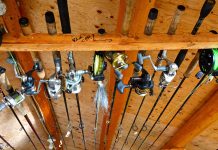
The same applies to your fishing gear when it comes to quality. These fish will put a tremendous amount of strain on your tackle, therefore unless you want to run the risk of losing that fish of a lifetime, it’s very important to have quality rods, terminal tackle, and reels that are spooled with fresh line.
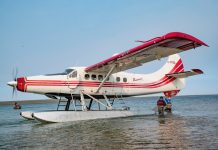
If you happen to enjoy some refreshment at the end of the day, Great Bear Lake Lodge carries a good selection of wine, beer, liquor and soft drinks. If staying at Arctic Circle Lodge, to save on weight as travel to the lodge is via float plane, you can order your favorite beverages directly through Plummer’s, who will ship it to the lodge prior to your arrival.
With respect to Trophy Lodge, check with Plummer’s regarding the availability of beverages.
Do you wear prescription glasses, or take prescription medication? If so, remember to bring along some spares – and DO NOT put them in your checked baggage.
I usually pack:
- Camera, and if using an SLR rather than my phone to take pictures, extra batteries and memory card(s), charger and assorted lenses, all packed in a small waterproof case.
- Phone charger.
- Kit bag, with toiletries, and a small assortment of patent medicines.
- Waterproof/breathable parka, and bib type pants.
- Polar Fleece jacket.
- 1 set of thermals.
- 6 to 8 – inch, waterproof/breathable – insulated boots.
- 2 pairs of thermal socks.
- 2 pairs of pants.
- 2 long sleeve shirts.
- 2 “T” shirts.
- Pair of insulated/waterproof gloves.
- Pair of light, neoprene gloves.
- Hat – either baseball, or Tilley style.
- Field Journal and pen. I enjoy makes notes about my daily experiences at the end of the day.
- E-reader and charger.
- 1 can/bottle of insect repellant, and a bug jacket.
- Polarized glasses, in a hard shell case.
- Tackle Box – I use a small Bass Pro, soft-sided “Extreme” Boat Bag, together with several plastic utility boxes.
- Green plastic garbage bag for bringing home dirty cloths.
- Plastic “Ziploc” type bag with three or four bungee cords in assorted sizes, and a small roll of duct tape.
- Tackle – see below.
- Small carry on with airline tickets, hotel reservation confirmation(s), lodge luggage tags etc. Please note that because Plummer’s will take all of your luggage – with the exception of your carry on – directly to the charter company airbase when you arrive in YK, your carry on should be large enough to accommodate a few personal items that you will need for your overnight stay.
- Leatherman or similar type multi-tool which you should NOT pack in your carry on unless you want it confiscated by airport security, and a
- Quality, soft sided, duffle type bag, big enough to hold all of the above, including tackle. I recently purchased an Eddie Bauer Expedition 22 2.0 45L Wheeled Duffel, and found it to be the perfect size for all of my gear.
Chapter 10
Tackle
Lake Trout are customarily caught trolling, although casting/jigging for them can also be very effective. Grayling, Char and Pike are more often than not caught while casting.
The best lures for Lake Trout are in my opinion Flatfish – T60 size, Half-Waves, in both 4.5 and 5.5 inch sizes, the Eppinger Huskie Devel – either the Jr. or the Sr. – and jigs in various sizes and weights.
As for lure colours, blue/silver, red/white/silver, chartreuse, copper/chartreuse or metallic green/orange have worked well over the years, but don’t be afraid to experiment. Bring a couple your favorite lures, because you never know, one of them might produce that next world record.
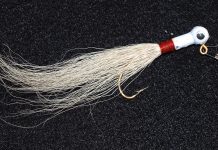
White bucktail jigs, either ¼ or 3/8 ounce in size, are great for picking up a shore lunch fish, or casting into the shallows with light tackle for smaller trout. Bigger jigs up to 2 oz. can also be very effective if targeting larger fish.
Grayling love small, 1/8 or ¼ ounce spinners, such as Mepps or Panther Martins, and will also take small jigs, dressed with a black or white grub.
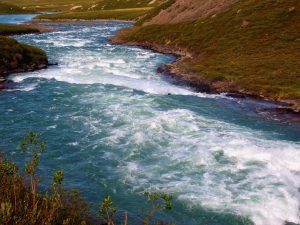
Char are usually caught in very fast water; so heavier spoons in the ½, to one-ounce range are the way to go. 7/8 ounce Pixies, with a red, orange or chartreuse inserts are very effective, as are Eppinger Devle Dog Kings.
Pike will attack just about anything, although they seem to be particularly fond of 7/16-ounce – Chrome/Blue – Blue Fox Vibrex spinners.
Regarding terminal tackle, you will need a couple of twelve to eighteen inch leaders for Pike, and several good quality, solid ring, coast lock, ball bearing snap swivels, such as those made by Sampo, Spro or Offshore Angler. Throw in a couple of weights as well, because if fishing later in the season, or if there is an early ice out, you will have to get your lure down to at least thirty feet, if not more.
I would recommend bringing a medium weight casting rod/reel combo for Char and Pike, and an ultra-light spinning rod/reel combo for Grayling.
The best option for Lakers in my experience, are longer, down rigger style rods in the 8′ to 9′ range, with a fast action tip, that can best absorb the head shakes that Lake Trout are famous for. My trolling rods are 2 piece and easily fit into most rod tubes. In terms of your trolling reel(s), I recommend that at a minimum, they have a capacity of 200 yards.
I personally prefer monofilament line, and spool my Laker combo with fresh with Trilene Big Game 25 to 30 pound test, my Char/Pike combo with 15/20 pound, and ultra- light, with 6 pound, although having said that, many anglers prefer braided line, which is also an excellent choice.
On the Fly
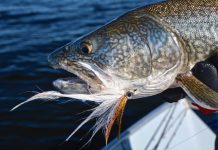
Fly -fishing has become increasingly popular on Great Bear – in fact Plummer’s offers 2 special Fly Fishing Weeks in August – and Lake Trout (including the big ones), Pike, Grayling and Char will all willingly take a fly.
If you plan on fly fishing for Lake Trout, you may want to consider taking along the following:
- 10 to 12 wt. rod.
- Large capacity reel loaded with plenty of backing and a full sink line.
- 4 to 5 ft. of 20 to 25 pound mono or fluorocarbon leader.
- 8 to 10 inch streamers, the flashier the better. Articulated streamers work very well, as they tend to provide a more exaggerated motion in the water than the one piece variety.
- 6 inch Clouser Minnows, in either black or chartreuse.

For Char and Pike, I would not recommend anything smaller than an 8wt, with a 10wt. probably being the better bet. For Grayling and smaller trout, a 6wt, or even something a bit smaller will be more than adequate. But do keep in mind that when fishing for smaller trout and Grayling in the shallows, its not unusual to fine some bigger down hanging around looking for a snack, so don’t go too light when choosing your rod weight.
When fishing for Char there are a number of variables to take into account, such as when during the season you are fishing, and water levels. For an excellent article on tactics and approaches when fishing the Tree River for Char, please click on the following link:

Should you decide to target Pike, pack some wire leaders, or heavy – duty fluorocarbon leader material.
Not surprisingly Grayling (and smaller size trout) prefer something small. Take an assortment of both wet and dry flies from #12 to #20, because they will take either type, but depending on the circumstances, there are times when only a dry fly will do.
To summarize:
- 2 down rigger style rods in the 8′ to 9′ range, with a fast action tip rod/reel combo spooled with 25-30 pound test.
- 1 medium weight, casting rod/reel combo spooled with 15/20- pound test.
- 1 ultra-light, rod/reel combo spooled with 6-pound test.
- 6 -T-60 Flatfish
- 2 – 4.5″ – Half – Waves
- 2 – 5.5″ – Half – Waves
- 2 – Husky Devel Sr’s
- 2 – Husky Devel Jr’s
- 6 – Pixies and/or Devle Dog Kings – ½ to 1 ounce.
- 2 – Blue Fox, Vibrex Spinners – 7/16 ounce
- 2 – White, bucktail jigs- ¼ or 3/8 ounce and a couple of heavier ones – 1 to 2 oz. if planning to fishing deeper
- 2 – Steel or fluorocarbon leaders – 12 to 18″
- 4 – Mepps or Panther Martin spinners – 1/8 or ¼ ounce
- Several, 1/8 ounce or smaller, marabou jigs and/or grubs
- 4 – each of 1-9/16″ and 2-5/16″ – solid ring, coast lock, ball bearing swivels, if using Sampo, or the equivalent sizes in Spro or Offshore Angler.
- 4 – 9/16″ – Sampo, or equivalent size in Spro or Offshore Angler ball-bearing swivels.
- 2 – 2 or 3 ounce, bottom walker, or clip on sinkers.
- Hook sharpener.
- 10 wt. fly rod
- 6 wt. fly rod
- 3 – fly reels with various types of line
- Sink tips
- Tippet material
- Assortment of wet/dry flies and large flashy streamers.
As mentioned, I would recommend packing the lures in appropriately sized, plastic utility boxes, that will all fit into a relatively small, soft sided tackle bag. The tackle bag can be compressed, and the boxes packed individually, so that everything will easily fit into your duffle bag.
In the event you’re not planning on fishing for anything other than Lake Trout, you can scale back on your tackle accordingly.
To transport your fishing rods safely, you will need a quality rod tube. The commercial models available at most sporting goods stores are, given my own experience, barely adequate at best, so unfortunately the only other option is to make your own tube.
If you are interested in building your own, please click on:
https://www.greatbearlakeoutdoors.com/2025/09/11/half-rods-will-travel/
There is a check – list covering all of the above at the end of this article, that you can either print, or upload onto your personal computer.
And finally, if fishing with a guide, they will be an invaluable source of information regarding tackle and tactics, and many of them carry a wide selection of lures that have proven successful over the years, which they will willingly lend you if you get caught short.
Add On’s Should You Decide On the Self-Guided Option
One of the increasingly popular trips being offered by Plummer’s Lodges is a self -guided trip that operates out of Arctic Circle Lodge.
Because you will not be fishing with a guide, who would normally have most, if not all of the items listed below, I would strongly recommend adding the following to your tackle bag.
- Heavy Duty Long Nose Pliers with a safety lanyard attached to the handle.
- Utility gloves – for handling fish, removing hooks etc.
- Metal Cutters, in the event you have to cut a hook.
- Weigh Scale – 50 pound min.
- Small First Aid Kit
- GPS with built in TOPO maps of the area.
- InReach Satellite Communicator or a similar device.
- Extra batteries for GPS and communicator if required.
Chapter 11
Where to Buy Stuff
For quality outerwear, Cabela’s/Bass Pro, Sail and Mountain Equipment Co-op (MEC) carry a good selection of all the top brands.
Many of the lures, and some of the terminal tackle I mentioned can be found at most of these stores, with the exception of MEC as they do not carry tackle. While in YK your best option is Canadian Tire, although the YK Walmart does carry some fishing gear and outerwear.
Great Bear Lake Lodge has a wide selection of proven lures at very competitive prices. There is also tackle available at Trophy Lodge, but it would be best to check with Plummer’s in advance of your trip in order to find out what is likely to be available there.

GBLL also has quality rods and reels that they will be happy to lend you in the event you don’t have, or prefer not to haul your own gear with you. If you are planning on taking advantage of this service, let them know ahead of time in order to ensure they have enough on hand. If staying at Trophy Lodge or Arctic Circle check with Plummer’s in advance regarding rod/reel availability.
If you happen to be overnighting in Edmonton or Calgary, you can visit Mountain Equipment Co-op, Bass Pro/Cabelas or the Fishin’ Hole, if you need to stock up, or forgot to bring something along.
You can also order online from any of these retailers.
T-60 Flatfish, and the bigger spoons can be a challenge to find, as are Sampo and Spro Swivels.
Bass Pro/Cabela’s carry Offshore Angler swivels, and Sail does stock a very limited selection of Spro’s, but the in-store selection tends to be very limited.
Rather than take a chance that the retailer will have what you need in stock, and if you decide not to buy at the lodge, I recommend purchasing direct from the manufacturer.
- Yakima Bait Company (T-60’s) – https://www.yakimabait.com
- Eppinger (Huskie/Devle Dog) – https://dardevle.com
- Lucky Strike Bait Works (Half-Wave) – https://luckystrikebaitworks.com
- Spro – www.spro.com
- Sampo – https://www.samposwivels.com
- Pelican Cases (waterproof camera cases) – www.pelican.com/ www.pelican.ca or Nanuk Cases- https://nanuk.com
- Cabela’s/Bass Pro Shops – basspro.com or www.basspro.ca
- Mountain Equipment Co Op – www.mec.ca
- Sail – www.sail.ca
That Should About Cover It
If contemplating a trip to Great Bear Lake, or if you have already booked, hopefully you have found this article helpful.
It’s not intended to cover every eventuality, but rather to provide an overview of what you can reasonably expect to encounter, where to find a cold beer, and the type of gear you’re likely to need should you indeed decide that a trip of this kind is right for you.
Great Bear Lake is truly a remarkable place, and while it can, and will throw any number of challenges your way, with some careful planning, and by setting realistic goals and expectations, you should have no difficulty overcoming them.
Take a moment and scroll through the Great Bear Lake Outdoors Photo Gallery, for a glimpse of what might be in store for you, on what is without a doubt, the greatest of all freshwater lakes.
Above all, have fun, enjoy and embrace the entire experience, which of course includes all of the planning, shopping – and dreaming – that will take place long before you even get there.