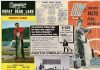




Other than the fact that an entire chapter of this book is dedicated to his travels on Great Bear Lake, the added reason for choosing to share this review is because it also represents what I consider to be one of the more captivating travelogues that was written at or around the turn of the 20th century.
When journeying to places that back in the day were considered wild, remote and anything but easy to get to, invariably travellers like Bell who chose to leave behind a chronical of their exploits, recorded them in capacious detail, painting a rich, vivid picture of what they saw and did using words alone.
While in some cases hand drawn illustrations were incorporated to augment their word sketches, any thought of perhaps taking along a camera was pretty much a non-starter. At the turn of the century cameras were rudimentary at best, the picture quality was generally bad, and with the possible exception of the Kodak Brownie, they were extremely cumbersome and heavy. Not ideal for carting around in a canoe or when travelling overland, where weight and space had to be very carefully managed.
There are numerous examples in this book where the author uses vivid descriptions of the settings, and in some cases events that allow the reader to visualize places they have never visited or otherwise experienced.
What follows are just 2 of many such examples.
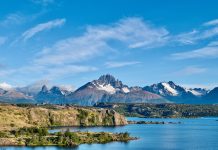
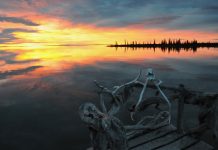
“It is never really dark in July at Great Slave Lake, and the night was further illuminated by the flickering diaphanous streamers of the northern aurora.
These gradually faded as the north-eastern sky brightened, heralding the approaching dawn.
The light slowly strengthened, the colours in the sky became warm and luminous, the smoothly billowing water scintillated like a vast opal.
Yellowish pink, lilac, purple, greenish blue, pale blue, danced and shimmered, forming a magic foreground to the fantastic silhouettes of the dark rocky islands.
No one spoke. We were all enthralled by the splendor.”
Impressive to say the least.
And another, while passing through the area where Gilbert Labine ultimately discovered pitchblende and silver:
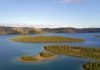
“We were wind-bound for several days in Echo Bay, situated in this stretch of shoreline, and found it to be a perfectly land-locked harbour, more than a mile long and of lesser width, surrounded by high hills which descend to the lake margin in talus slopes of course fragments, or in precipices of solid rock. The variegated mineral staining – red, black, pink, white and green – gave scintillating reflections in the deep, transparent water, and suggested a locality to lure the prospector.”
And if you have ever visited Echo Bay, which I fortuitously have, his description could not be more accurate.
But I digress.
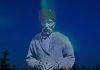
Perhaps by now you may be wondering who exactly James Mackintosh Bell was?
During the 57 years of his life, he established himself as a consummate world traveller/explorer, having earned a wide variety of academic credentials and compiling a notable resume of professional accomplishments including:
• MBA
• PHD
• LL.D
• Order of the British Empire (OBE)
• Fellow of the Geographical Society of America
• Fellow of the Royal Geographical Society
• Fellow of the Royal Society of Canda
• President of the Australasian Institute of Mining Engineers
• Director of the Geological Survey of New Zealand
• Captain in the 73rd (Royal Highlanders) Battalion of Montreal
• Major, British Military Mission in Russia, Intelligence Branch, and in his spare time
• The author of several books including, Sidelights of the Siberian Campaign, and The Wilds of Maoriland , Tales of the Red Children.
Chapter 11 – A journey to Great Bear Lake – outlines in exquisite detail his expedition from April to October in 1900 during which time he conducted a geological survey and otherwise explored the area around Great Bear Lake.
Accompanying him to assist with the scientific work was Charles Camsell, whose career as a geologist began with this trip. His name may even be familiar to you, as Great Bear’s largest in flowing river bears his name.
In making his way to Great Bear Lake he trekked across the ice on Great Slave Lake by dogsled, then travelled down the Mackenzie River on board the HBC Steamer “Wrigley,” and after ascending the Great Bear River, journeyed by canoe on and around much of the big lake.
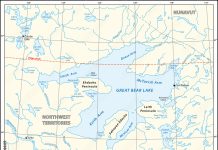
While there he travelled to and mapped many places that will likely sound familiar to those of you who have visited more recently, such as Deerpass and Mackintosh Bays, Ikanyo Island, Katseyedie River, Dease River, Fort Confidence, Kendall River, Cape McDonnel, Rocher Rouge Island (Red Rock), Echo Bay, Conjuror Bay, Richardson Island, and the Camsell River to name just a few.
In fact, with the possible exception of the McVicar arm, he had visited the 4 remaining arms that comprise Great Bear Lake.
Another element of this narrative I enjoyed is that unlike many other travellers to these Northern climes, Bell does not shy away from making some pointed remarks about the bugs.
For example, on page 11, when commenting on the swarms of mosquitoes and bull-dog flies that were tormenting him and his pack animals on one particular portage:
“A Klondike -seeker shot himself saying, “Hell can’t be worse than this, therefore I’ll chance it.”
And again on page 27, while travelling with a rather illustrious group of individuals that included F.G. Banting and A.Y. Jackson he states:
“The mosquitoes were busier, I am sure, than ever before, but that godsend, fly-tox, made the tents comfortable even when the pests were so thick that it seemed as if space had to be carved out to permit their erection.”
This book was first published in 1931 by the Macmillan Company of Canada Limited, at St. Martin’s House, and there are both some original copies and reprints still available, including on Amazon.ca.
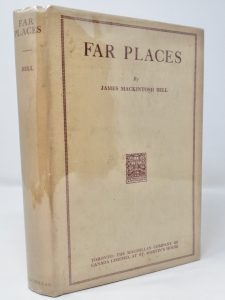
If you enjoy the type of narrative where the writer is seeing and experiencing places like Great Bear Lake for the very first time, I would highly recommend picking up a copy, and as an added bonus, this book also contains chapters on his sojourns to Great Slave Lake (visited and revisited), New Caledonia, The Kirghiz Steppes, Jamaica and Albania.
In fact, I think you may especially enjoy his description at page 126 of the treatment that was administered to an unfortunate traveller who had suffered several Scorpion bites while travelling through the Kirghiz Steppes of Central Asia.